Why Our Signature Par-4 Demands Respect
Don’t Let the Scorecard Lie: Course Management is King on Crestview’s Toughest Hole
Every great course has a hole that stays in your head long after you’ve left the parking lot. At Crestview Golf Club Kalamazoo, that hole isn’t a long par-5 or a water-guarded par-3; it’s the deceptively difficult 7th hole.
This hole is a quintessential Crestview test. While our course is known for its open, forgiving layout, the 7th forces you to stop swinging for distance and start swinging for position.
Breaking Down the Challenge
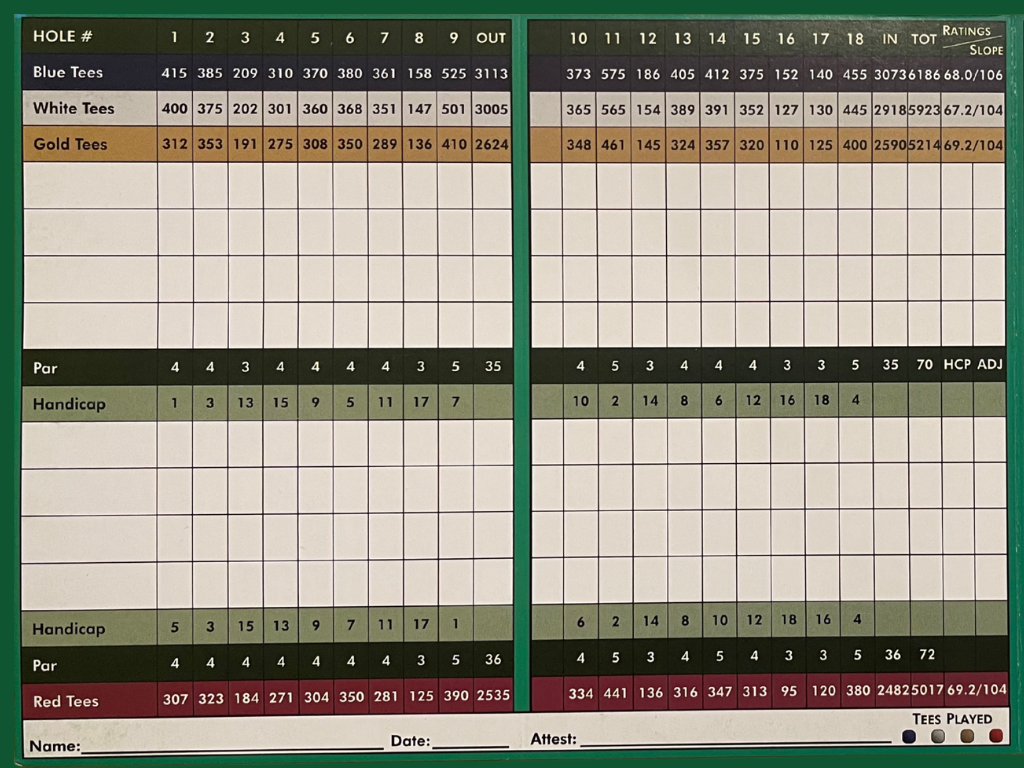
The 7th hole is a crucial point on the front nine. It requires two excellent shots just to have a chance at par. Here are the distances from the primary tees:
- Blue Tees (Long): 361 Yards
- White Tees (Middle): 351 Yards
- Red Tees (Forward): 289 Yards
Why It’s the Toughest Par-4
Despite the yardage being relatively short for a par-4, the 7th consistently ranks high on the handicap ranking for most players. The reason for the challenge is the combination of tight tree lines, the need for precise club selection, and the fact that the hole layout is not straight, creating a classic dogleg design that punishes misplaced drives.
- Mistake: Trying to bomb your driver for a wedge approach.
- Result: Ending up in the thick trees that guard both sides of the fairway, often forcing you to chip out sideways and guaranteeing a bogey or worse.
- The Strategy: The 7th is a classic “Second Shot” hole, which is the signature challenge of the Crestview course overall. You need to hit a controlled fairway wood or a long iron off the tee to find the optimal landing zone, leaving yourself a mid-iron approach into the green. Respecting the yardage and the design will often turn a likely five into a solid, confidence-building par four.
Was it Always Hole #7?
While there is no public record detailing the precise sequence of construction for every hole over the club’s 60+ year history, we can make an informed assumption based on the era and the course architect:
- Strong Likelihood of Being Original: Duane Anson and his family owned and operated the club from its founding in 1965 until the recent acquisition. Given that the course is generally cited as an 18-hole design from that era, it is highly probable that Hole #7 was part of the original 18-hole layout designed by Anson.
- Design Consistency: The strategic nature of Hole #7—a challenging, relatively short par-4 that demands course management—fits the style of traditional, older course architecture often found in Michigan clubs founded in the 1960s. Major overhauls typically introduce elements like modern wetlands or extreme mounding, which are not characteristic of this specific hole’s challenge.
Conclusion: It is reasonable to present Hole #7 as one of the original holes designed by founder and architect Duane Anson, reflecting the strategic challenges intended when the course opened in 1965.
A Word from Bob Bales, PGA Professional
“The 7th hole is where you either trust your fundamentals or you don’t. Golfers treat it like a generic par-4, but that’s a mistake. The key to playing the 7th successfully is leaving the driver in the bag and hitting a controlled shot—a three-wood or a hybrid—that finishes 150 yards from the green. We are a course that rewards strategy over brute force and the 7th hole perfectly defines the strategic nature of Crestview Golf Club.”
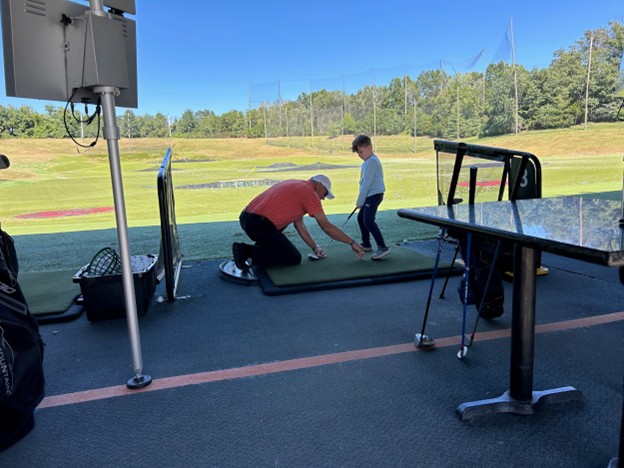
To book a free consultation or a lesson with Bob, email him here or call (269) 349-1111.
Did you know you can purchase a Driving Range Membership for $350? Get unlimited range balls for the entire 2026 season. And don’t miss the chance to lock in the absolute lowest rates under the new ownership. The 60th Anniversary Specials are temporary and will end soon. (LINK TO MEMBERSHIP PROMOTION)
Tags: Crestview Golf Club Hole 7, Signature Hole Par 4, Golf Course Strategy, Dogleg Challenge, Duane Anson Design, Kalamazoo Golf Course, Bob Bales PGA.