Common Mistakes We See on the Driving Range (And How to Fix Them)
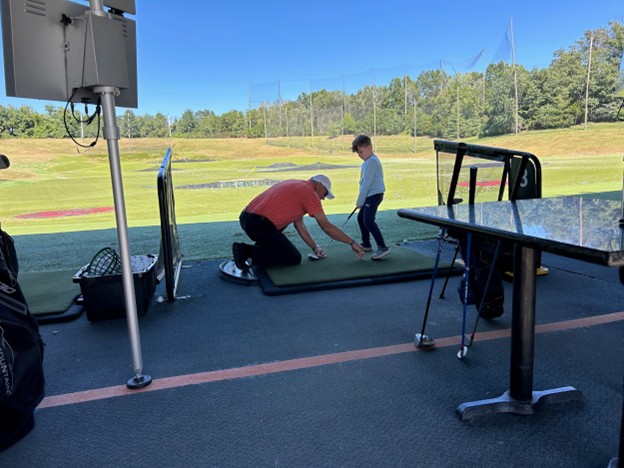
The Crestview Golf Course driving range is where improvement starts, but far too often, we see golfers wasting balls and practicing bad habits that then fall apart the moment they step onto the course. Fixing these errors requires discipline, a plan, and knowledge of some simple PGA fundamentals, according to Crestview Head Pro and General Manager Bob Bales.
Here are the Top 5 most common mistakes we see at the range and the simple fixes our PGA Professional staff recommends.
- Error: Hitting Too Many of the Same Club You hit 20 drivers in a row, groove a fantastic swing, and then wonder why it disappears on the first tee. Hitting the same club repeatedly does not mimic real golf.
Fix: Practice like you play. After a short warm-up, switch clubs (Driver, 7-Iron, Wedge, 3-Hybrid) after every shot or, at most, every two shots. This forces you to re-adjust your grip, posture, and ball position, training the muscle memory you need on the course.
- Error: Ignoring Alignment and Aim Most mats at the range aim slightly off-target (or you just set up crooked). You compensate with a “swing fix” during your practice that works on the range but sends the ball slicing when you get on the actual fairway.
Fix: Use an Alignment Stick or Club. Always lay down a club or alignment stick on the ground that points at your target, parallel to your feet and shoulders. Treat this as the railroad track. Every single shot, check that your feet, hips, and shoulders are perfectly square to that stick.
- Error: The Death Grip You grip the club too tightly because you believe it gives you more control or power, but this locks up your forearms, shoulders, and wrists. You lose swing speed and crucial lag.
Fix: Grip with Your Fingers, Not Your Palms. Aim for a “5 out of 10” pressure rating. The goal is to hold the club securely enough that someone can’t pull it out of your hand, but loose enough that your wrists can hinge freely. This loose tension allows for greater clubhead speed and better timing.
- Error: The “Dive Right In” Mistake You walk straight onto the range and start whaling away with your driver or 5-iron, hitting cold shots that jar your body and often lead to poor results for the entire bucket.
Fix: Start with Your Wedges. Treat the range session like a pre-round warm-up. Start with a pitching wedge or 9-iron and hit easy, three-quarter swings to stretch your core and sync your timing. Slowly work your way up to the mid-irons, hybrids, and finally the driver. This prevents injury and guarantees the first 10-15 balls are productive.
- Error: Focusing on Distance, Not Target Every shot is hit with max effort, trying to reach the far fence. You get immediate satisfaction from distance but never practice precision, which is what actually lowers your score.
Fix: Pick Small Targets and Control Your Distance. Focus on the 100-yard sign or a specific barrel, and try to make the ball land within a 10-yard radius. When using your driver, pick a specific tree or post to act as a narrow fairway. If you can’t hit a target on the range, you certainly won’t hit one on the course.
To successfully transfer the skills you build at Crestview’s practice area to the first tee, you must introduce mental pressure and variation into your routine. Instead of hitting balls mechanically, you need to turn your practice into a course simulation, ensuring every shot has a consequence and a purpose. This focused effort ensures the mechanics you grooved on the range—like your controlled grip and aligned setup—will hold up when the pressure is on and your score actually counts.
Four Things to Remember When You Get on the Course
When you step off the driving range and onto the first tee at Crestview, keep these four principles of transfer training in mind:
- Commit to the Routine: The specific pre-shot routine you used before every practice shot (checking your alignment stick, visualizing the flight) must be identical on the course. Do not shorten or skip it.
- Trust Your Focus: Once you start your downswing, focus only on the target and the feel of the swing you grooved. Do not allow technical swing thoughts (like “keep my head down” or “rotate my hips”) to enter your mind.
- Accept the Lie: The course provides uneven lies—ball above your feet, ball below your feet. Resist the urge to change your swing mechanics to compensate. Trust your fundamental practice and just focus on making solid contact.
- Manage the Mistakes: Remember that bad shots happen even to pros. When you hit a poor shot, accept it immediately. Do not dwell on the swing fault; simply commit your entire attention to the next shot and your routine.
A Word from Bob Bales, PGA Professional
“The range is where most of your swing fundamentals are built, yet it’s often where golfers pay the least attention to their setup. If you take the time to use a simple alignment stick, check your grip pressure, and practice with different clubs, you’ll transfer your game from the range to the course instantly. Based on my experience (going on 30 years), I can tell you that every successful golfer focuses on quality practice, not just quantity.”
To book a free consultation or a lesson with Bob, email him here or call (269) 349-1111.
Did you know you can purchase a Driving Range Membership for $350? Get unlimited range balls for the entire 2026 season. And don’t miss the chance to lock in the absolute lowest rates under the new ownership. The 60th Anniversary Specials are temporary and will end soon. (LINK TO MEMBERSHIP PROMOTION)
Tags: Driving Range Mistakes, Golf Swing Fixes, Bob Bales PGA, Golf Alignment, Golf Grip, Golf Practice Tips, Kalamazoo Golf Instruction, PGA Best Practices